
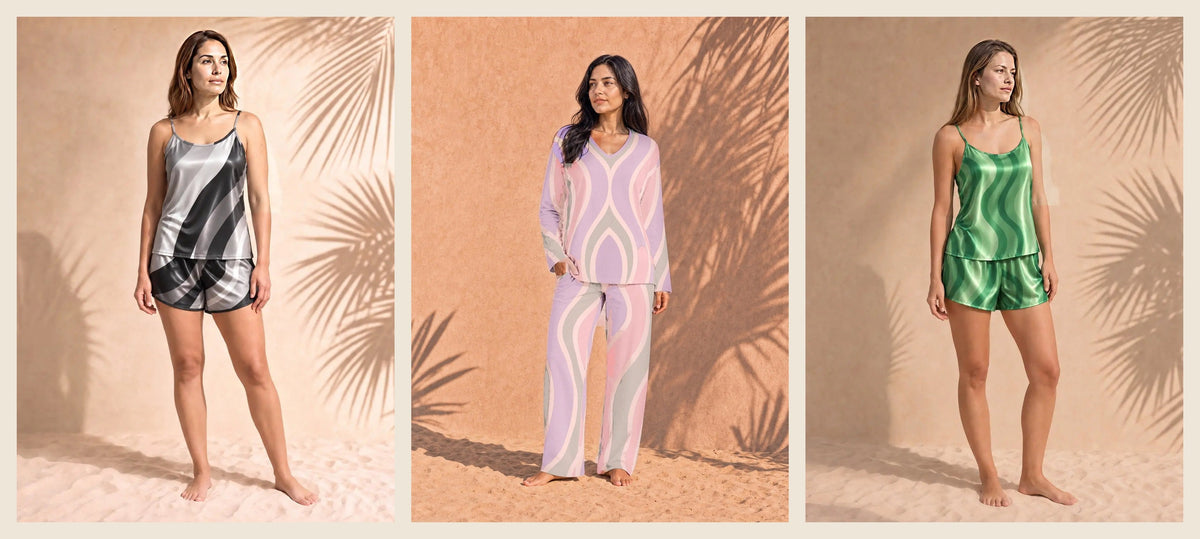
The real knit versus satin pajamas question usually arrives at a very ordinary moment: you are standing in front of the mirror after a shower, deciding whether tonight calls for something easy or something a little extra. Both can look polished. Both can make a simple night at home feel more intentional. But they create very different experiences once you settle into the couch, climb into bed, or get an unexpected text that friends are stopping by.
For a wardrobe built around comfort that still shows up well, fabric is not a minor detail. It changes how pajamas move, how they handle temperature, how much fuss they require, and whether you will still want to wear them after breakfast. Here is how knit and satin compare in real life.
Knit Versus Satin Pajamas at a Glance
Knit pajamas are made from interlocking loops of yarn, which gives the fabric its familiar softness and natural stretch. Think of the pieces you want for a lively morning around the kitchen table, a long flight, or a movie that turns into two movies. They tend to follow the body gently rather than sit stiffly on it.
Satin is a weave, not a fiber. It may be made from silk, synthetic fibers, or blends, and its smooth surface creates that recognizable sheen. Satin pajamas are often chosen for the occasion: a sleepover, a vacation photo, a bridal weekend, or an evening when you want your bedtime uniform to feel dressed up.
Neither is automatically better. The better choice is the one that fits your body, your temperature, and the way you actually spend time at home.
How Knit Pajamas Feel to Wear
A good knit set feels soft from the first wear and gets its appeal from ease. The fabric has enough give for stretching across the bed to grab a phone charger, curling up on the sofa, or moving through the morning without constantly adjusting a waistband or sleeve. That flexibility matters if your pajamas regularly become your coffee outfit, your work-from-home layer, or your low-key dinner-at-home look.
Knit also tends to be more forgiving in fit. The stretch can accommodate small changes in how you want a garment to sit without making it look sloppy. Still, softness is not an excuse for a vague shape. A thoughtfully cut knit top should skim rather than cling, and pants should have room through the seat and leg without pooling at the ankle. Proper proportions are what make a set feel relaxed and pulled together at once.
For many sleepers, knit is the more practical everyday choice. Breathable knit fabrics can feel comfortable across seasons, especially when the room temperature changes overnight. The exact fiber content matters, though. A lightweight cotton-rich knit generally feels airier than a dense synthetic one, while a modal or rayon blend can offer an especially smooth, drapey hand.
The trade-off is that knit has a more casual visual language. It can look elevated with a great color, original print, and clean silhouette, but it will not give you satin's high-shine, special-occasion finish. If you want a fabric that announces itself when you walk into the room, satin has the advantage.
When Knit Is the Better Call
Choose knit when your pajamas need to keep up with a full evening and a full morning. It is especially useful for people who sleep in a range of positions, run a little cool, prefer coverage without restriction, or like loungewear that can leave the bedroom.
It also makes sense for coordinated family dressing. Kids need room to move, adults want pieces that do not feel costume-like, and nobody wants a matching moment that comes with scratchy fabric or constant slipping. A well-designed printed knit set can feel connected without looking like a uniform.
What Satin Pajamas Do Differently
Satin earns its place because it feels sleek against the skin. Its smooth face reduces the textured, cozy sensation associated with knit and replaces it with a cool glide. On a warm evening or in a hotel room with the thermostat turned up, that can feel lovely.
Visually, satin has immediate drama. Light catches the surface, colors appear richer, and even a simple button-front top can read as intentional. It is the fabric for pouring something bubbly, putting on a playlist, and making an ordinary Friday night feel like an occasion. Satin can also be a beautiful choice for gifting because it has that unmistakable unwrapping effect.
But the same qualities that make satin glamorous can make it less effortless. Many satin fabrics have little to no stretch, so fit needs to be more precise through the shoulders, chest, hips, and thighs. Smooth fabric can slide around in bed, and some people dislike the feeling of a satin pant leg twisting or a cami strap shifting overnight.
Satin can also show wrinkles, snags, and water spots more readily than a knit. Care instructions vary widely by fiber, so do not assume every satin set can take the same wash routine. A silk satin piece may require more delicate handling, while synthetic satin is often easier to wash but may not breathe as well for some sleepers.
When Satin Is the Better Call
Satin is a strong choice when you are dressing for the mood as much as for sleep. Reach for it for a girls' weekend, a celebratory getaway, bridal events, or a night when you want the getting-ready part to feel special. It also works for people who prefer a cooler, smoother surface and do not need much stretch.
If you love satin's look but hesitate to sleep in it, use it as an at-home evening set instead. Wear the top with relaxed pants while you host, then change into your favorite knit set when it is actually time to sleep. There is no rule that says one pair has to do everything.
Sleep Temperature Changes the Answer
If you sleep warm, satin may sound like the obvious winner because it feels cool at first touch. That initial coolness is real, but breathability depends on the fiber underneath the satin weave. A synthetic satin can trap heat for some people, especially under heavy bedding. A breathable lightweight knit may ultimately feel more comfortable through the night.
If you sleep cool, knit usually delivers more consistent comfort. Its soft structure holds a little more warmth, and its stretch makes layering easy. A knit long-sleeve top with shorts or lightweight pants lets you adjust without giving up that cozy feel.
For couples with different sleep temperatures, the answer may simply be separate fabrics. Matching is fun, but sleeping comfortably is better. You can coordinate by color or print while choosing silhouettes and materials that suit each person.
Fit Matters More Than the Fabric Label
A beautiful pajama set that pinches at the waist or rides up at the shoulder will stay in the drawer. With knit, look for recovery: the fabric should stretch comfortably and return to shape rather than sag after a few hours. With satin, look for enough ease to sit, sleep, and move without pulling across seams.
Pay attention to details that affect daily wear. An elastic waist should feel secure without leaving a deep mark. Pockets are useful if you spend your morning carrying a phone and a coffee around the house. Button-front tops can be great for nursing, layering, and a more tailored look, while pull-on styles are often the easiest choice for sleeping.
At Pip & Moon, the appeal of knit is not just softness. It is the chance to wear original, Brazilian-inspired color and print in pieces that are cut for real bodies and real plans - from slow mornings to somewhere with a table.
Caring for Each Fabric
Knit is generally the lower-maintenance option, especially for frequent wear. Washing in cool water and avoiding high heat helps preserve softness, color, and stretch. Turn printed pieces inside out when possible to keep the surface looking fresh.
Satin deserves a little more patience. Follow the care label, use a gentle cycle if permitted, and keep it away from rough items that can catch the fabric. Avoid tossing satin in with towels, zippers, or anything abrasive. If you are packing it for travel, folding it carefully or using a garment bag can help limit creasing.
The practical question is simple: are you happy to give this pair special treatment? If the answer is no, choose the fabric you will happily wash, wear, and reach for again.
So, Which Pair Belongs in Your Drawer?
Choose knit pajamas if you want versatile softness, movement, dependable comfort, and a set that can handle coffee, couch time, school drop-off, and a friend at the door. Choose satin pajamas if you want a sleek, cool-to-the-touch finish and a little ceremony around the evening.
The best pajama drawer often has room for both. Keep knit close for the nights and mornings that need ease. Save satin for the moments when staying in is the plan, but looking a little fabulous is part of it.
Comments