
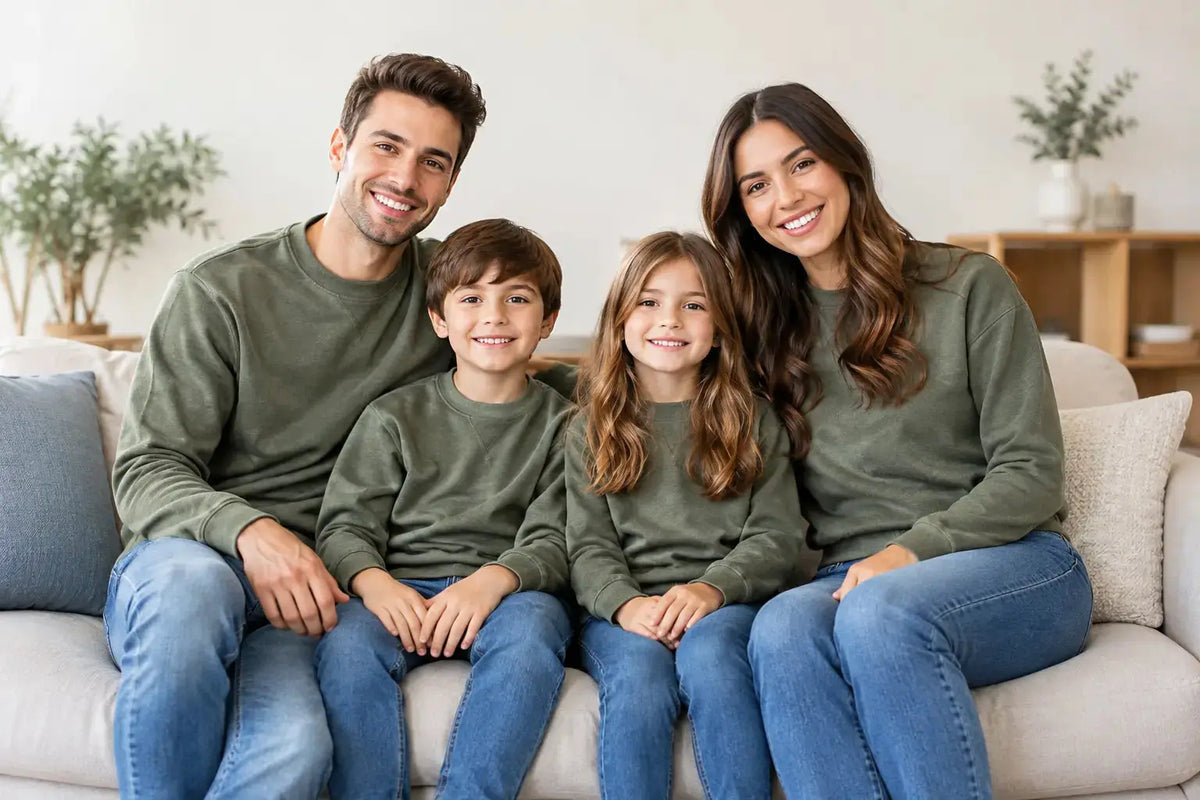
A matching moment should not turn your family into a set of identical cutouts. The best modern family matching clothes feel like a shared point of view: a bright print at breakfast, coordinated color on the way to a birthday dinner, soft pieces that still look right when friends drop by. You are not dressing for a catalog. You are dressing for the lively, slightly unpredictable plans that make up a real weekend.
The difference is in the details. Modern matching is less about everyone wearing the exact same thing and more about choosing pieces that belong together while letting every person look and feel like themselves. Think original prints, considered cuts, and enough comfort to make the outfit an easy yes.
Start With a Shared Color Story
Color does much of the coordinating work before anyone notices a print. A family can look connected in one print, in complementary shades, or in a mix of both. The goal is visual rhythm, not perfect duplication.
If your closet leans calm, a soft sky blue, sand, or monochrome palette keeps the look easy and polished. If your family likes color with a little more presence, orange, pink, and wave-inspired blues bring the energy without requiring extra styling. A strong print can be the center of the outfit, while a solid or quieter color gives it room to breathe.
This is especially useful when everyone has a different comfort zone. One person may happily wear a full printed set. Another may prefer the same color in a simple shirt or a solid piece paired with a printed bottom. They still read as a group, just not a uniform.
Let one piece lead
Choose one visual anchor, then build around it. Maybe it is a parent’s printed lounge set, a child’s colorful shirt, or a dress in a rich, graphic pattern. Pull one or two colors from that piece for everyone else. This approach feels intentional in photos, but it is even better in motion - when someone is carrying snacks, sitting on the floor, or making a quick stop somewhere with a table.
Matching does not need to mean head-to-toe print for every family member. It can mean a pink shirt with a patterned pajama pant, a wave print paired with navy, or the same artwork shown in different silhouettes. The shared thread matters more than the exact formula.
Choose Modern Family Matching Clothes by Moment
A coordinated wardrobe earns its place when it works beyond one staged occasion. Before choosing a set, picture where it will actually go. A cozy movie night has different needs than a vacation morning, a family photo session, or a casual dinner after a long day.
For home, softness and movement come first. Look for pieces that can handle coffee at the kitchen table, couch time, and the small chaos of getting everyone ready. A relaxed pajama set can feel special enough for a sleepover or holiday morning without feeling precious.
For travel, matching separates are often the smarter choice. A comfortable shirt and pull-on pant can move from a car ride to a hotel lobby with minimal effort. A casual dress in the same color family gives one person an easy one-piece option while everyone else stays coordinated. The less an outfit needs fixing, the more likely it is to make it out the door.
For a social plan, the line between loungewear and ready-to-go clothes matters. The fabric should still feel soft, but the shape should look deliberate. A polished collar, an easy dress cut, a clean shirt, or a print with depth can carry the outfit into brunch, a backyard gathering, or an early dinner without the feeling that you forgot to change.
Dress for the photo, but not only the photo
Family photos are a perfectly good reason to coordinate. They mark a trip, a birthday, a holiday, or a season you may want to remember exactly as it felt. Still, the outfits should not become costumes that everyone is relieved to remove ten minutes later.
Pick colors that flatter the people wearing them, and cuts they can move in. If children are tugging at stiff waistbands or adults are adjusting oversized pieces all afternoon, the photos will show it. Relaxed people look better. That is not a styling trick. It is just true.
Fit Is What Keeps Matching From Looking Costume-y
Generic matching sets often start with one adult shape and simply shrink it down. That can work for novelty pajamas, but it rarely creates clothes people reach for again. Bodies are different, and clothing should account for that.
A more considered family wardrobe uses body-specific cuts. A women’s set can have the drape and proportion that make it feel flattering. A men’s shirt can have enough room through the shoulders without swallowing the frame. Kids’ pieces should be built for sitting cross-legged, racing down a hallway, and falling asleep in the back seat.
That is one reason coordinated dressing can feel surprisingly grown-up. Each person gets a garment that makes sense on its own, while the colors and artwork create the connection. Pip & Moon approaches family outfitting this way, with original Brazilian-inspired prints offered across silhouettes rather than one scaled-down idea for everyone.
Sizing deserves a little attention, especially if you are ordering for a trip, a photo day, or a gift. Measure when you can, check garment guidance, and prioritize the fit each person likes to wear. For children between sizes, consider how much growing room you want and whether the style is meant for lounging or frequent outings. A closer fit may look sharper, while a roomier one can get more mileage.
Make the Print Feel Personal
A print can say more than a slogan tee ever could. It can recall a favorite city, a summer trip, a family’s love of bold color, or simply a mood that makes everyone smile. That is why original artwork matters. It gives the outfit a point of view.
Brazilian-inspired design, for example, can bring in the joy of tiled streets, beachside waves, bright fruit, and sunset color without looking like a souvenir. The best versions use those references with restraint: graphic enough to stand out, wearable enough to live in. A good print should look just as at home on a child building a blanket fort as it does on an adult meeting friends later that evening.
If a full pattern feels like too much, use it in smaller doses. Match printed pajama pants with solid tops. Put the same motif on one child while the rest of the family picks up its accent colors. Or reserve the full look for a holiday morning when a little extra is exactly the point.
Build a Small Matching Rotation
You do not need a new coordinated look for every event. A small, flexible rotation is more useful and more fun to style. Begin with one print your family genuinely likes, then add a second color story that can mix with it. From there, choose silhouettes each person will wear repeatedly.
A practical rotation might include a soft set for nights in, a casual shirt or dress for daytime plans, and a few separates that bridge both. When the pieces can cross over, getting dressed becomes less of a production. The kids can choose between two options, adults can adapt to the plan, and everyone still looks connected.
There is also room to let people opt out. A teenager may prefer the family color rather than the exact print. A partner may want a shirt instead of a matching set. That does not break the look. It makes it more believable. Coordinating works best when it leaves space for personal taste.
Keep It Easy Enough to Repeat
The real test of family matching clothes is not whether they look good in a carefully edited photo. It is whether you want to wear them again next Saturday. Choose pieces that are soft, washable, and comfortable enough for an ordinary morning, then let the color and print make that ordinary morning feel a little more considered.
When everyone feels good in what they are wearing, the matching part becomes secondary. It turns into a small visual reminder that you are heading into the day together - even if the day starts with spilled juice, missing shoes, and a last-minute change of plans.
Comments