
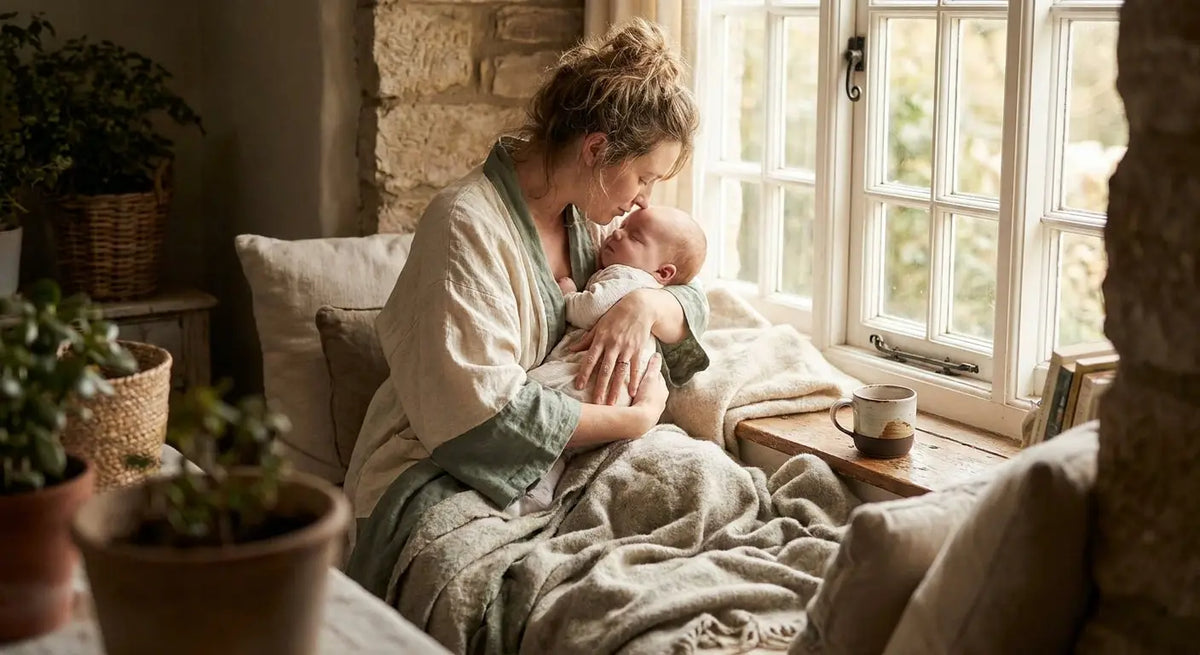
Your Body Just Did Something Extraordinary
Getting dressed after having a baby can feel like a quiet reckoning. The mirror shows someone both familiar and brand new, and that disorientation is real. It's not vanity to want clothing that fits. It's self-recognition.
The American College of Obstetricians and Gynecologists defines the first 12 weeks postpartum as the "fourth trimester," the highest-risk window for perinatal mood and anxiety disorders. That framing matters. It tells us this period deserves the same intentional care as pregnancy itself.
This is not a bounce-back guide. It's a reframe of postpartum comfort as something long-term and multi-dimensional: physical, emotional, fabric, fit, and a recovery timeline that stretches well past the six-week mark.
The Extended Fourth Trimester: Recovery Doesn't End at 6 Weeks
Six weeks. That's the number most new parents hear as the finish line for postpartum recovery. But physical, hormonal, and emotional healing can extend well beyond 12 months. Maternal health professionals have increasingly adopted the term "extended fourth trimester" to capture this longer, more honest timeline.
The postpartum recovery wear market reflects how real this need is. Valued at $4.8 billion in 2025, it's projected to reach $7.2 billion by 2034, growing at a 5.2% compound annual rate. That growth isn't driven by marketing. It's driven by millions of people whose bodies are telling them something their wardrobes haven't caught up with yet.
Postpartum bodies move through unpredictable transitions: C-section healing, fluid retention shifts, nursing fullness that changes from morning to evening. Pre-pregnancy clothing rarely fits right away, and for many, it doesn't fit for a long time. Forcing garments that pull, pinch, or gap during this vulnerable window is associated with increased self-criticism and body dissatisfaction, both documented contributing factors to postpartum depression.
Dressing for the body you have now is not defeat. It's the opposite. It's a decision to meet yourself with compassion instead of a measuring tape. The body that carried and delivered a child deserves clothing designed to honor where it actually is, not where it used to be.
Comfort Is a Clinical Concept (and a Feeling)
Postpartum comfort isn't just a nice idea. It's a validated clinical concept with physical, psychological, and social dimensions, measured using tools like the Postpartum Comfort Questionnaire. Researchers study it. Clinicians track it. It matters.
A 2025 systematic review and meta-analysis found that non-pharmacological comfort interventions, including massage, breathing techniques, and environmental comfort measures, had a statistically significant pooled effect size of 1.45 on postpartum wellbeing. That's a strong result, and it confirms what most new parents already sense: the things that surround your body affect how you feel inside it.
Healthcare providers consistently list comfortable, loose-fitting, soft-fabric garments as a core postpartum essential for both vaginal and C-section recovery. The C-section comfort gap is especially worth noting. With global cesarean rates projected to reach 28.5% by 2030, the need for high-waist, incision-safe, soft-waistband garments is growing, and mainstream fashion largely ignores it.
Consumer behavior is already reflecting this clinical reality. Postpartum loungewear searches grew 30% in mid-2026. Requests for breezy, soft styles are up nearly 700%. These aren't passing trends. They're signals that people are looking for something the market hasn't fully provided.
There's a sensory dimension here, too. Postpartum hormonal shifts increase skin sensitivity, sometimes dramatically. Fabric choice during this period isn't a style preference. It's a genuine wellbeing decision. What touches your skin matters more now than it did before.
Getting Dressed as a Mental Health Ritual
Postpartum care specialists describe intentional dressing as a meaningful self-care ritual. Pulling on something soft and considered can positively impact mood and sense of identity during a period when both feel fragile.
The clinical landscape underscores why this matters. Postpartum depression affects approximately 1 in 7 new mothers in the United States. Diagnosis rates nearly doubled between 2010 and 2021, rising from 9.4% to 19.0%. The American College of Obstetricians and Gynecologists now recognizes PPD as the leading complication of childbirth. Body dissatisfaction is a documented contributing factor.
Beautiful, expressive clothing serves a psychological function during this season. It signals to yourself that you still exist as a person, not only as a caregiver. That signal is small, but it's real. And it's worth more than another grey sweatshirt pulled from the back of the closet.
Too many postpartum dressing guides focus purely on function: elastic waistbands, nursing access, easy-wash fabric. Those things matter. But aesthetic joy matters too. Original design, color, and artistry carry emotional weight. They remind you that your life still has texture and beauty, even on the hardest days.
It's also worth noting that 8 to 10 percent of non-birthing partners experience postpartum depression, often tied to sleep loss, financial pressure, and identity shift. Comfort and recovery are a whole-family concern. Coordinated family loungewear, like Pip & Moon's pieces designed in the same hand-drawn prints across adult XS to XXL and kids 2T to 14, can create a sense of togetherness and normalcy during a disorienting season. Wearing the same print as your partner, your toddler, your newborn: it's a small, grounding act of belonging.
What to Actually Look for in Postpartum Clothing
If you're building a postpartum wardrobe (or refreshing one mid-recovery), here are the design features that matter most:
- Button-front or wrap-style tops allow nursing access without full undressing, which matters at 3 a.m. and matters just as much when visitors arrive.
- High-waist pants with soft elastic sit above or below C-section incisions, avoiding pressure on healing tissue.
- Modal or modal-cotton blends regulate temperature during hormonal night sweats and feel gentle against sensitized skin.
- Machine-washable everything. Postpartum life is unpredictable. Laundry is constant. Hand-wash-only is not your friend right now.
The best postpartum outfits blend the ease of loungewear with the polish of real clothes. You need pieces that work for cluster-feeding on the couch and for stepping outside to get air without changing first. Day-to-night versatility is a necessity in this season, not a luxury.
Most importantly: invest in pieces that fit now. Not pieces saved for "when I get back to my old size." Dressing for the body you have is the whole point.
Comfort Doesn't Have to Be Colorless
Somewhere along the way, postpartum comfort clothing became synonymous with shapeless neutrals. But comfort and beauty are not opposites. Wearing something with color, print, or intentional artistry is its own form of self-recognition. It says: I'm still here, and I still care about what I put on my body.
Consumers are increasingly prioritizing longer-use, versatile garments that span pregnancy and postpartum. Investing in beautiful pieces that serve you now and continue to serve you later makes practical sense, not just emotional sense.
The postpartum period is one of the most profound seasons of a life. The clothes worn through it deserve to reflect that. Not to disappear into beige utility, but to carry the color and intention of someone who just did something extraordinary.
Comments